
Fairhope Dental Marketing: Five-Minute Rule for More Patient
September 1, 2025
Did you know nearly 80% of new customers choose the first business that responds to them? In the world of Fairhope dental marketing, speed isn’t just a bonus – it’s a necessity. When a prospective patient reaches out to your Fairhope dental practice (whether by online form, email, or phone message), the clock starts ticking.
Every minute that passes reduces your chances of turning that inquiry into a booked appointment. This is the essence of the “Five-Minute Rule,” a game-changing approach that savvy dental practices use to consistently win more patients.
In this comprehensive guide, we’ll explore why following up with leads within five minutes can dramatically boost your appointment bookings. You’ll learn how quick follow-ups give you a competitive edge in Fairhope dental marketing, the psychology behind why patients respond so strongly to speed, and practical tips (backed by 2024/2025 data) to implement a lightning-fast follow-up system.
Let’s dive in and see how being faster than your competition can fill your dental chairs and supercharge your practice’s growth.
The Five-Minute Rule: Your Golden Window for Lead Conversion

What exactly is the Five-Minute Rule? It’s simple: reach out to a new lead within five minutes of their inquiry. That five-minute window is often called the “golden window” in lead conversion, and for good reason.
Responding quickly can be the difference between landing a new patient or losing them to a competitor. Consider these eye-opening industry findings:
- Dramatically higher conversion odds: Research shows you are up to 21 times more likely to convert a lead if you follow up within 5 minutes versus waiting just 30 minutes. In other words, a prompt call or reply multiplies your chance of securing that appointment.
Some studies even found an 8-10x increase in conversion rates just by contacting leads in those first five minutes. The faster you respond, the more you tilt the odds in your favor. - Leads turn cold quickly: After the initial 5-minute window, the likelihood of ever reaching or booking that lead drops sharply. Data indicates that just a 5-minute delay can cause up to an 80% decrease in the probability of qualifying the lead.
Each minute beyond that golden window means the prospect’s interest is cooling off. They may have started contacting another dentist, gotten distracted, or lost the sense of urgency that made them reach out in the first place. - “Speed-to-lead” is now the standard: In 2025’s digital age, people expect rapid responses. It’s no longer acceptable to wait hours (or days) to follow up. Quick-response practices report significantly better results from their marketing.
If you make it a habit to contact inquiries within minutes, you’re capitalizing on peak interest – catching potential patients when they’re most ready to schedule an appointment.
In short, the Five-Minute Rule isn’t just a theory; it’s backed by hard evidence. A famous study on sales lead response found contacting a lead in five minutes makes you 100 times more likely to even connect with them compared to waiting half an hour.
The takeaway for dental practices is clear: speed wins. Those first few minutes after a prospective patient reaches out are incredibly valuable. Treat them like gold, and you’ll see more new patients walking through your door.
Why Speed Matters for Dental Practices in Fairhope

Responding fast is important for any business, but it’s especially critical for local dental practices in a community like Fairhope.
Here’s why acting quickly on leads can make or break your growth in this market:
- First to respond, first to book: When someone in Fairhope is looking for a new dentist, they might contact several offices – requesting information or consultations from you and your competitors.
Who wins that new patient? More often than not, the practice that responds first gets the appointment. In fact, about 78% of patients will go with the first responder.
This means if your office calls back in 5 minutes and others take an hour or a day, you’ve likely secured that patient before the others even pick up the phone. Speed becomes your competitive advantage.
As the saying goes, “If you’re not first, you’re last.” In the context of lead follow-up, coming in second might mean losing the patient altogether. - Fairhope is competitive: For a city of around 25,000 people, Fairhope has a healthy number of dental providers. Patients have choices. Whether you’re a general dentist, cosmetic specialist, or family practice, there are others vying for the same patients.
A lightning-fast follow-up sets you apart as more responsive and caring. Imagine a potential patient leaves messages with two clinics: one calls back in 5 minutes, the other returns the call the next day. It’s obvious which practice appears more eager and professional.
Being proactive and prompt sends a message that you value the patient’s time and need – crucial for winning trust in a community-driven place like Fairhope. - Trust and reassurance: Dental care is personal. Many people feel anxious or uncertain when reaching out to a dentist (especially new patients or those with dental fears).
If you respond quickly, you immediately start building trust. A fast follow-up call that says “Hey, we got your request and we’re here to help you,” reassures the patient that your office is on the ball.
This positive first impression can make them feel more confident about scheduling and showing up for that appointment. In contrast, a slow response might leave them wondering if your office is disorganized or not interested, driving them to seek help elsewhere. - Local word-of-mouth: Fairhope is a close-knit community where news travels fast. When you consistently follow up with inquiries promptly, people notice.
They might mention to friends, “I contacted Dr. Smith’s office and they called me back almost immediately – I was impressed.” Being known as the responsive, customer-service-oriented dentist adds to your reputation.
Over time, this can translate into more referrals and positive reviews for your practice. Speedy service is a selling point that patients will talk about, especially when others in town may have experienced frustrating delays with different offices.
The bottom line is that in a local market like Fairhope, every lead is precious. You work hard to get prospective patients to contact you – through advertising, your website, social media, and referrals. When one finally reaches out, don’t squander the opportunity by delaying.
A fast follow-up could clinch an appointment before the patient even considers calling the next dentist on their list. It’s one of the simplest ways to outperform your competition without spending an extra dollar on marketing.
By being the quickest to respond, you position your practice as the front-runner – and in most races, the front-runner wins.
The Psychology of Immediate Response: Building Trust and Value

Beyond the statistics and competitive edge, there’s a human psychology element to fast follow-ups. Patients are people, and how quickly you respond affects how they feel about your practice. Let’s unpack why a prompt reply makes such a big impact on potential dental patients:
- Feeling valued and cared for: When a dental office responds right away, the prospective patient subconsciously feels important. They think, “Wow, they got back to me already – I matter to them!” This feeling of being valued can significantly influence their decision.
Dental care often has an emotional component (fear, urgency, personal health concerns), so patients want to choose a dentist who shows that they care.
A speedy reply is an immediate way to demonstrate, through actions, that you prioritize their well-being. It sets a warm, caring tone before they even step into your clinic. - Trust and professionalism: First impressions form fast. A prompt follow-up gives an impression of professionalism, efficiency, and reliability. It signals that your clinic is well-run and customer-focused.
Patients equate prompt service with competence. If you call them in 5 minutes, they’ll imagine that same level of attentiveness carries over into how you handle appointments, emergencies, and follow-up care.
On the other hand, if they wait days for a callback, they might worry that appointments could be slow or disorganized too. Trust begins with that first interaction, and a quick response inspires confidence that your practice is dependable. - Capitalizing on peak interest (and emotion): When a person reaches out about a dental appointment, they’re often at a high point of interest or need.
Maybe they just cracked a tooth, decided it’s time for a cosmetic consult, or finally got the nerve to inquire about a procedure they’ve been putting off.
At that moment, they are highly motivated and perhaps a bit anxious. If you engage them immediately, you meet them at that peak of motivation, which makes them far more likely to book.
A fast response can catch them before doubt or procrastination sets in. If left waiting, that motivation can fade – they might start second-guessing the visit or their pain might temporarily subside and they delay treatment.
Speed lets you “strike while the iron is hot,” turning their initial interest into a scheduled appointment before it cools. - Reducing anxiety and uncertainty: Dental inquiries sometimes come with a dose of anxiety – many people are nervous about dental visits. A quick, friendly follow-up can ease those nerves.
For instance, if someone messages your practice about a toothache, a fast response not only secures the appointment, but also gives you a chance to calm their worry (“We can see you first thing tomorrow to get you out of pain”).
The sooner you communicate, the less time the person spends worrying or feeling uncertain. You replace their uncertainty with a plan of action. This kind of responsiveness and reassurance builds a positive patient relationship from the outset. - Demonstrating urgency and importance: When you reply swiftly, you’re indirectly communicating that oral health is important and urgent. This can rub off on the patient – they’ll feel that scheduling and showing up are important too.
For example, if a patient inquires about a whitening treatment and you call back in 5 minutes enthusiastically, they sense your energy and urgency. It subtly reinforces that their smile is a priority and might motivate them to move forward now rather than later.
In summary, fast follow-ups aren’t just a mechanical business tactic; they’re a form of patient care. You’re catering to the psychological needs of your prospects – the need to feel heard, valued, and secure in their choice. Especially in a personal field like dentistry, building trust early is everything.
A five-minute response isn’t just about getting an appointment booked; it’s about starting a patient relationship on the best possible note. When a potential patient feels that “this office is really on top of things and cares about me,” they are far more likely to convert to an actual patient and remain loyal down the line.
The Cost of Slow Follow-Ups: Lost Leads and Wasted Marketing
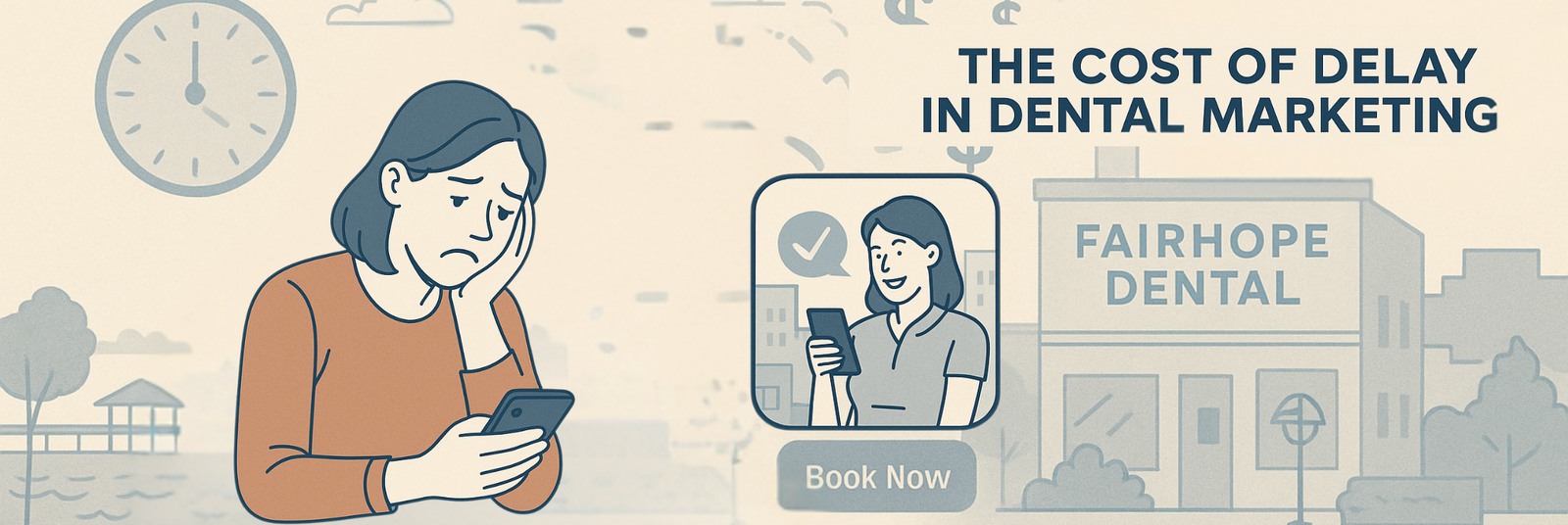
What happens if you don’t follow the Five-Minute Rule? In short: you lose out. Slow or inconsistent follow-ups carry a heavy cost for dental practices – in missed patients, wasted marketing spend, and even damage to your brand reputation. Let’s look at the consequences of a slow response:
- Leads slip through the cracks: In many offices, a web inquiry or voicemail can sit for hours, sometimes days, before someone responds. Unfortunately, that often means the opportunity is gone.
Studies have shown that if you wait even 30 minutes to an hour, the chances of connecting with a lead plummet. One Harvard Business Review study found that only 37% of companies respond within an hour – and a vast number never respond at all.
In the dental field, that percentage might be even lower due to busy schedules during clinic hours. If you’re taking too long, there’s a good chance the person has already booked elsewhere or lost interest by the time you reach out.
Every hour of delay increases the likelihood the patient will choose another dentist or simply give up on the search. - Average response times are too slow: To put things in perspective, industry research has found that the average first response time for online leads is measured in hours – even as high as 17 to 42 hours in some cases.
Think about that: many businesses are taking one to two days to get back to interested prospects. Now, reflect on your own practice’s habits.
If you only check inquiries once every morning or return calls at the end of the day, you might be unknowingly matching those sluggish averages. And in doing so, you’re leaving money on the table.
A potential patient who contacts you Monday afternoon might not hear back until Tuesday – by then, they’ve likely moved on. What could have been a booked appointment on your calendar becomes a no-contact “lost” lead. - Wasted marketing dollars: This is a critical point often overlooked. Dental practices invest a lot in marketing and advertising – whether it’s Facebook ads, Google search ads, mailers, or dental SEO services to rank on search engines.
These efforts are designed to make the phone ring and bring in inquiries. But if your front desk doesn’t handle those inquiries with urgency, it’s as if you’re pouring your marketing budget down the drain.
For example, imagine paying for dental PPC services (Pay-Per-Click ads) that successfully generate 50 new patient leads this month. That’s great – but it only translates to actual revenue if those leads convert into appointments. If slow follow-up causes even half of them to go cold or choose another dentist, you’ve effectively lost half the return on your ad spend.
In contrast, by responding to every lead quickly, you maximize the conversion from your marketing. Your cost per acquired patient goes down because fewer of those expensive leads are wasted.
In simple terms: marketing brings leads to your door, but only swift follow-up gets them through your door. - Patients equate slow response with poor service: We live in an on-demand era. When a business is slow to respond, people often interpret it as a sign of the service quality overall.
It might not be fair, but it’s human nature. If a patient waits a long time to hear back from you, they might worry: “If it’s this hard to get a call back, what if I become a patient? Will I wait weeks for an appointment, or struggle to get help in an emergency?”
This perception can erode trust before it even fully forms. On the flip side, a quick follow-up signals a well-run practice that values patients, giving a positive impression of the service they can expect. - Missed revenue and growth opportunities: Each potential patient who doesn’t convert due to slow follow-up is lost revenue. Calculate the lifetime value of a dental patient – it can be thousands of dollars when you factor in ongoing cleanings, treatments, family referrals, etc.
Losing even 5 or 10 leads a month because they weren’t followed up promptly can amount to a significant revenue shortfall over a year. Moreover, those could have been long-term relationships contributing to your practice growth.
Slow follow-up is essentially a silent growth killer, capping how much your practice can expand. It’s especially detrimental for newer practices or those trying to scale up their patient base. - Being beaten by more agile competitors: If there’s another dental office in Fairhope that’s prioritizing lead response, they’re going to win patients that you could have had.
Perhaps they’ve adopted an after-hours answering service or simply trained their staff to jump on new inquiries immediately. Their agility means your marketing is inadvertently feeding their schedule.
It’s a harsh truth: the most efficient practice often wins, even if they aren’t the best clinically. Patients will choose the practice that made it easiest for them to get an appointment and information.
If your competitor is simply faster, they may appear more “on top of things” and attract the very people your ads reached first.
In essence, slow follow-up creates a domino effect of negatives: missed patient opportunities, wasted investment, and a tarnished reputation. The cost is far greater than the convenience of responding at a leisurely pace.
The good news is that this is entirely fixable – and often with minimal cost. It’s about process and urgency, not necessarily more budget. Next, we’ll look at how you can tighten up your follow-up game to avoid these losses and convert more of those hard-earned leads into actual appointments.
Implementing the Five-Minute Rule: Tips for Lightning-Fast Follow-Ups
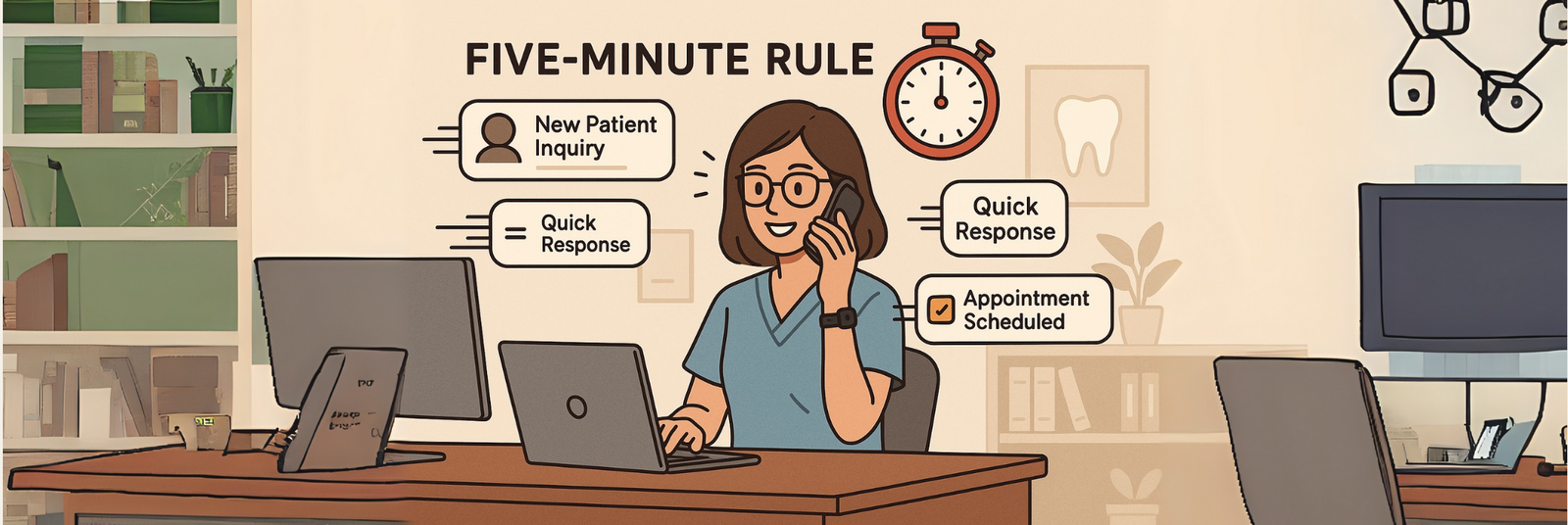
Knowing the value of quick follow-ups is one thing; implementing it in a busy dental office is another. You might be wondering: “With everything going on in my practice, how can we consistently respond within five minutes?”
The truth is, it is possible – even without hiring extra staff – if you put the right systems in place. Here are some practical tips and strategies to help your team strike while the iron’s hot:
- Enable Instant Lead Alerts: Speed starts with immediate notification. Make sure that the moment a lead comes in (whether via your website, email, Facebook page, or a phone voicemail), you or your staff get alerted right away.
Set up technology to help: for example, have your website contact form send a text message or push notification to the office manager’s phone the second someone submits an inquiry.
Many modern Customer Relationship Management (CRM) systems or even simple email-forwarding rules can do this. The key is that no lead should sit unnoticed for any length of time. If you know about it instantly, you can act on it instantly. - Make New Inquiries the Top Priority: This might sound obvious, but it requires a mindset shift. Treat every new lead like an emergency – not in a panicked way, but in the sense that it demands immediate attention.
Train your front desk and team that a new patient inquiry is the most important task at that moment. For instance, if a staff member is filing charts or making recall calls and a web lead notification pops up, they should pause and address the lead first.
Create a protocol: the first person to see a new inquiry stops what they are doing and either calls the lead or assigns it to an available team member within minutes.
It can be helpful to role-play this and instill the habit until it becomes second nature. Remember, a prospective patient won’t wait around – and your current tasks can usually wait 5 minutes. - Use Automated First Responses: You might not always be able to fully reach the person within 5 minutes (they could be away from their phone when you call), but you can still show responsiveness.
Automation is your friend here. Set up an auto-response email or text message for any web inquiries. For example, when someone submits a form on your site, they should get an immediate reply like: “Thank you for contacting Bright Smiles Dental! We received your request and will call you within the next 10 minutes.
If you need to reach us sooner, please call our office at 555-1234.” This kind of instant acknowledgment assures the lead that their message didn’t vanish into a black hole. It buys you a little time to follow up personally while keeping them warm.
Similarly, if someone leaves a voicemail, have a system (even if it’s manual) to send a quick text: “Hi, this is Dr. Jones’s office. We got your message and will call you back in just a few minutes!” These touches show the patient you’re on it. - Extend Your After-Hours Coverage: One of the challenges is that 44% of leads come outside of business hours (evenings, weekends). If a potential patient in Fairhope submits a request on Saturday afternoon, waiting until Monday morning to reply is far from optimal.
Consider solutions to engage leads even when your office is closed. Options include: an answering service that can pick up calls live and schedule tentative appointments or reach out to you for urgent leads; or deploying a chatbot/AI on your website that can handle basic inquiries 24/7.
Some dental practices use services where off-site representatives respond to web chats or forms after hours, following scripts you provide. Even a well-crafted voicemail message that encourages the caller to leave details and promises a prompt callback first thing in the morning is better than silence.
The goal is to never let a lead feel ignored. If you can’t reach them within minutes after hours, reach them as soon as humanly possible once you’re open, and apologize for any delay.
Better yet, plan ahead for off-hours: for example, rotate on-call staff who check emails in the evening, or use a tool that notifies you at home when a hot lead comes in.
Many modern systems (and even mobile apps from companies like Podium or others) can alert you so you can fire off a quick text from the couch, securing that contact before the competition does. - Have Pre-Scripted Responses and Questions: Time is of the essence, so it helps to have a game plan for the actual follow-up conversation. Prepare a short call script or bullet points for common inquiry types – e.g., new patient cleaning appointments, specific procedure inquiries like dental implants or Invisalign, or emergency toothache calls.
Train your team on these scripts so they don’t have to fumble or figure out what to say on the fly. The script should include a warm greeting, a thank-you for contacting you, and then key questions to gather info and a prompt to schedule.
For example: “Hello, this is Sarah from Dr. Smith’s office – thank you for reaching out! I understand you’re interested in whitening. We actually have a special consultation slot open tomorrow afternoon; would you like to come in at 3 PM?” By confidently guiding the call, you both impress the lead and efficiently move toward booking them.
Preparation shaves minutes off your response process and ensures consistency. - Leverage Technology for Speed: Beyond notifications and automation, consider other tech tools that boost responsiveness.
A few ideas: Implement an online scheduling option on your website (some patients will book themselves if given the chance – a zero-minute response!). Utilize text messaging for follow-ups – many people will respond to a text faster than answering a phone call, and it can be done in seconds.
There are services and CRM systems that integrate texting so you can quickly shoot a message like, “Hi, this is Dr. Lee’s dental clinic – we got your web request.
Is there a good time to chat today to help you?” Texting can often engage a lead faster than email or phone tag. Also, explore the new wave of AI assistants for small businesses – for instance, some AI tools can now handle initial web chats or even text conversations, ask preliminary questions, and hand off the lead to a human once they’re ready to schedule.
These can operate 24/7, ensuring an instant interaction. The technology you choose should fit your practice size and budget, but even simple additions (like a live chat widget or WhatsApp Business auto-replies) can make a big difference in lead capture speed. - Track and Refine Your Response Time: You can’t improve what you don’t measure. Start tracking how fast you’re currently responding to new inquiries.
This can be as straightforward as keeping a log: note the timestamp when a lead comes in and when follow-up contact is made. If you use a CRM or even a spreadsheet, you can calculate an average response time.
Set a clear goal (e.g., “We will respond to every lead within 5 minutes during office hours, and within 15 minutes after hours up until 9 PM”). Share these goals with your team and make it a point of pride to hit them.
If you find certain days or times where you’re slipping (perhaps during lunch hour or busy patient periods), adjust your system – maybe assign a specific person each day to be the “lead responder” who keeps an eye out while others are with patients.
By monitoring your performance, you’ll identify bottlenecks and can celebrate improvements. Perhaps initially your average was 2 hours – after implementing changes, you got it down to 30 minutes, then 10 minutes.
Keep pushing until that average sits comfortably within the 5-minute mark. Your consistency will skyrocket, and so will your conversion rate.
By putting these strategies into action, you’ll create an office culture that treats new patient leads with the urgency they deserve. It might require some training and tweaks to your routine, but the payoff is tremendous: more leads turning into actual appointments and a reputation for responsiveness that differentiates you from other Fairhope dentists.
Implementing the Five-Minute Rule is less about working harder and more about working smarter – using tools and team coordination to ensure no interested patient falls through the cracks. Now that we’ve covered the “how,” let’s connect this back to the bigger picture of your overall marketing strategy and success.
Maximizing Marketing ROI with Fast Follow-Ups
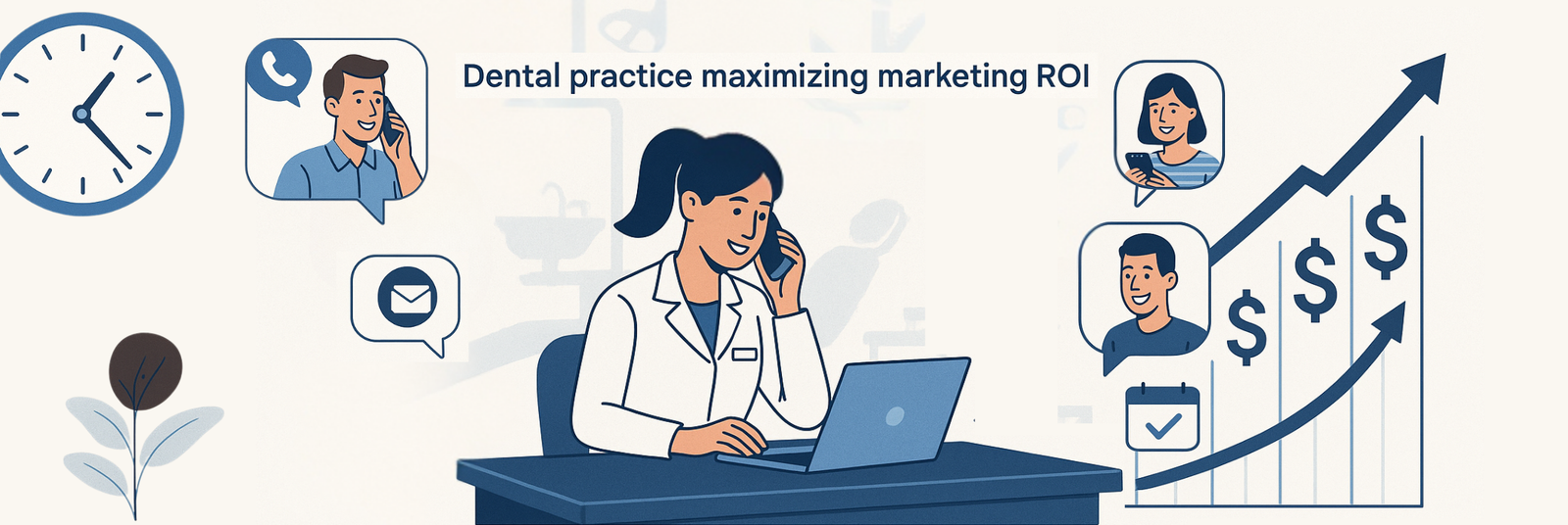
Successful dental practices know that generating leads and converting leads are two sides of the same coin. If you’ve invested in promotion and digital marketing services to attract new patients, rapid follow-up is what ensures those efforts truly pay off.
Here’s how the Five-Minute Rule ties into your broader marketing and why it amplifies every dollar you spend on growth:
1.Synergy with your marketing channels:
Think of each marketing channel as a pipeline bringing potential patients to you. For example, your dental SEO services might be helping your website rank #1 on Google for “Fairhope dentist,” driving a steady flow of visitors who fill out your contact form. Or your dental PPC services (like Google Ads or Facebook Ads targeting Fairhope residents) might be generating dozens of inquiries for cosmetic dentistry each month.
These strategies are doing their job – attracting interested prospects. Now, fast follow-up is the force multiplier. When you respond to those SEO or PPC-driven leads within minutes, you dramatically increase the likelihood they convert.
Essentially, you’re making the most of every click and every call that your marketing brings in. Without quick follow-up, many of those hard-won leads would evaporate, meaning you’d need to spend much more on marketing to hit your new patient goals.
With a speedy response system, however, you leverage your marketing fully – squeezing the maximum appointments out of the leads you get.
2.Better ROI (Return on Investment):
Let’s put it in simple numbers. Imagine you spend $1,000 on an online ad campaign and get 20 inquiries – a cost of $50 per lead. If slow follow-up or missed calls mean only 5 of those actually schedule, your cost per acquired patient is $200. But if, through immediate follow-ups, you convert 15 of those leads into appointments, your cost per patient drops to about $67.
That’s a huge improvement in marketing efficiency. The money you’ve already spent goes further. Over time, this can allow you to either reduce your marketing spend for the same result or scale your marketing without wasting money. Fast follow-up is essentially free marketing leverage – it doesn’t cost much, if anything, to implement, but it makes every marketing dollar more effective.
3.Higher patient lifetime value capture:
When you swiftly convert a lead into a patient, you’re not just gaining a one-time appointment. You’re potentially gaining a long-term patient who will return for cleanings, treatments, and refer family or friends. The lifetime value of a patient can be several thousand dollars over years of loyalty.
By improving your follow-up speed, you increase the number of these lifetime relationships you capture from your marketing. This means the true return (in long-term revenue) on your Fairhope Dental marketing Agency campaigns becomes much greater.
Two practices could spend the same on advertising, but the one with better follow-up might build a patient base twice as large from that spend because they retained those patients over time.
4.Stronger reputation and reviews:
Marketing isn’t just ads and SEO – it’s also word-of-mouth and online reputation. By being consistently responsive, you encourage satisfied patients who will speak well of your service. People might leave reviews saying things like, “I contacted several dentists and XYZ Dental got back to me immediately and got me in the next day.
Fantastic service!” These positive testimonials act as organic marketing, attracting even more patients. Conversely, a lead that never got a callback could easily turn into someone telling others, “I tried reaching that clinic but they never responded,” which hurts your reputation.
In the age of social media and Nextdoor (a popular community app in many cities), these comments circulate. Thus, follow-up speed indirectly feeds your brand image as a responsive, patient-centric practice – a selling point that no amount of paid advertising can buy once you’ve earned it.
5.Capitalizing on local opportunities:
Fairhope is a unique market, with local events and seasonal influxes (for example, tourists or snowbirds in certain times of year, or community events that might spark people searching for a dentist). If you run a targeted campaign during such times, being on the ball with follow-up lets you seize the moment fully.
Let’s say you sponsor a booth at the Fairhope Arts & Crafts Festival and encourage attendees to inquire online for a special offer – you might get a surge of leads that weekend.
If you’re ready to answer within minutes (“Thanks for visiting our booth! Yes, we can get you scheduled next week…”), you’ll convert a high percentage while your practice is still fresh in their minds.
This agility in tying marketing to follow-up means you can confidently do promotions, knowing the leads will be handled promptly. It’s a holistic strategy: attract, respond, convert – each part reinforcing the other.
6.Interlinking with service offerings:
Another subtle benefit – when you talk to leads quickly, you have more opportunity to understand their needs and possibly cross-promote relevant Fairhope Dental SEO services. For instance, a patient might contact you about a cleaning, and because you responded so fast, you get into a conversation where you learn they’re also interested in teeth straightening.
You can then mention your Invisalign or ortho services, planting a seed for future treatment that increases the value of that patient.
Quick conversations allow for this kind of engagement; a delayed email response often keeps things transactional and brief. Essentially, a rapid follow-up call is also a chance to begin educating the patient on all the ways you can help them, which ties into better case acceptance later.
By making fast follow-up an integral part of your marketing strategy, you ensure that no lead is left behind and that all the effort (and budget) spent on attracting new patients truly translates into practice growth. It’s about working smarter: you’ve already done the hard work of getting someone’s attention – now capitalize on it before it fades.
Dentists often focus on cutting marketing costs or trying new advertising tricks, but improving lead response may be the single most effective (and easiest) way to boost your new patient numbers.
It’s like having a leaky bucket – you can pour more water (leads) in, or you can just plug the leak. Fast follow-ups plug the leak in your marketing bucket, ensuring that the new patient flow you generate stays with you.
Conclusion: Speed is the New Competitive Edge in Dental Marketing
In the ever-evolving landscape of dental practice growth, one timeless truth has become crystal clear: speed matters. The Five-Minute Rule encapsulates this truth – respond to prospective patients with urgency and you will reap the rewards. For dental practices in Fairhope and beyond, this is a golden opportunity.
Many of your competitors will underestimate or mishandle lead follow-ups. By contrast, you now understand that simply being the quickest to respond can make you the top choice for patients time and again.
Implementing fast follow-ups is not overly complex, nor does it require huge resources. It’s about commitment, process, and mindset. From the moment you adopt this approach, you’re telling your community that your practice is different.
You’re the dentist who calls back before anyone else, the office that values patients’ time, and the team that’s organized enough to make new patients a priority. These impressions translate directly into more booked appointments, higher patient satisfaction, and ultimately, practice growth.
Remember, every lead is a potential lifelong patient. The way you handle that first contact sets the tone. Responding in five minutes with warmth and competence can turn a curious web visitor into a loyal patient who might stay with your practice for years.
On the flip side, letting leads languish can silently stunt your growth without you even knowing which opportunities you missed.
As an expert who’s been in the marketing field for 25+ years, I’ve seen fads come and go – but prompt customer service never goes out of style. In fact, in today’s fast-paced world, it’s more critical than ever. Businesses that master speed-to-lead (and do so with genuine care) tend to dominate their market. There is simply no substitute for making someone feel heard immediately.
So, take a look at your current process and ask: How fast do we follow up, and how can we do it faster? Use the tips outlined here, empower your team, and leverage technology to close the gap. Once you start capturing more of those leads, you’ll see the difference in your appointment book and your bottom line.
Finally, don’t forget to integrate this philosophy across all your patient interactions. From the first call to treatment follow-ups, responsiveness can become a hallmark of your brand. It’s an attribute patients will love and competitors will struggle to match. In a service-oriented profession like dentistry, that’s a recipe for long-term success.
Ready to fill more chairs and welcome more smiles in Fairhope? It’s as simple as being the first to say “Hello, how can we help you?” when patients reach out. Embrace the Five-Minute Rule today, and watch your practice win more dental appointments tomorrow. Fast follow-ups aren’t just a tactic – they’re your new secret weapon in dental marketing success.
Frequently Asked Questions (FAQ)
Q1: What is the ideal lead response time for a dental practice?
The ideal lead response time for a dental practice is within five minutes. This is a critical window because a potential patient’s interest and motivation are at their highest point right after they submit a form or inquiry. By responding quickly, you are far more likely to engage them in a conversation and schedule an appointment before their interest wanes or they move on to a competing practice.
Q2: How can dental marketing automation help a busy practice follow the Five-Minute Rule?
Dental marketing automation is the most effective way for a busy practice to follow the Five-Minute Rule. The system can be configured to send an immediate automated text message or email to a new lead, confirming their inquiry and letting them know a team member will be in touch.
At the same time, it can send an alert to the front desk. This ensures that every lead is engaged instantly, preventing them from falling through the cracks, regardless of how busy the office gets.
Q3: What are the key benefits of improving patient acquisition through fast follow-ups?
Improving patient acquisition with fast follow-ups provides significant benefits. Firstly, it leads to a much higher patient conversion rate because you are reaching them while they are still actively searching.
Secondly, a rapid response creates an excellent first impression, building trust and signaling that your practice is attentive and professional. This strategy also gives you a strong competitive advantage in your local market, ultimately maximizing the return on your marketing investment.
Dental Marketing Agency in Sylacauga: Should You Hire?
Introduction For a dental practice in Sylacauga, standing out can...
Forecasting With Data: How Predictive Tools Help Selma Dentists Plan Staffing & Growth
Introduction In today’s data-driven world, even dental practices are discovering...
Ads for Dental in Scottsboro: Book More Local Patients
Introduction For over 25 years, I’ve watched marketing trends come...
AI Content in Dentistry Saraland: Save Time & Stay Authentic
Introduction Artificial intelligence is making waves in AI Content in...
Omnichannel Dental Marketing in Prichard: Reach Every Patient
Have you ever noticed an ad for a product seemingly...








2025 ALL RIGHTS RESERVED MADE IN INDIA
